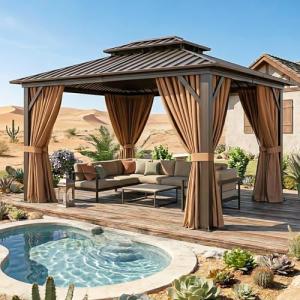
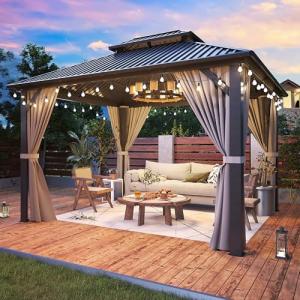
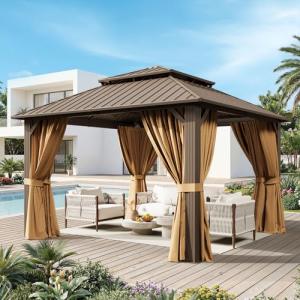
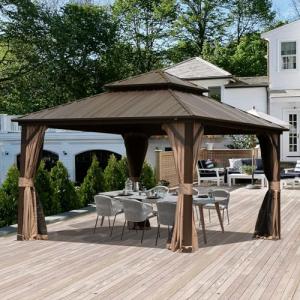
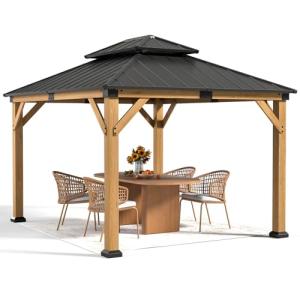
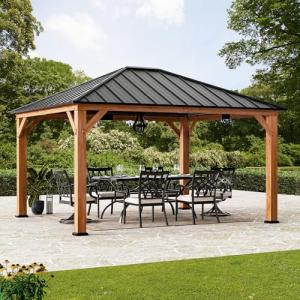
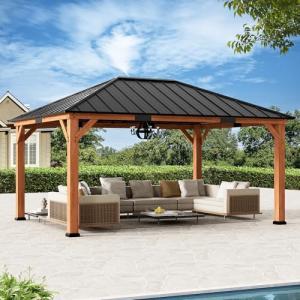
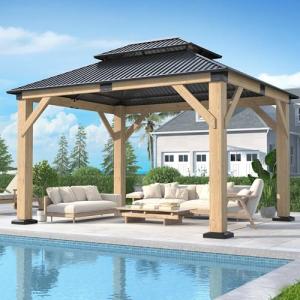
What Is a Hardtop Gazebo?
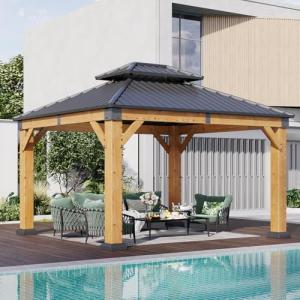
A hardtop gazebo is a freestanding outdoor structure with a solid, rigid roof — typically made from aluminium, galvanised steel, or tempered polycarbonate — supported by sturdy posts. Unlike soft-top canopy gazebos, which use fabric or polyester covers that sag, fade, and eventually tear, a hardtop model is built to last through the seasons without constant maintenance or replacement parts.
The defining feature is the roof. Whether it's a single-tier aluminium panel design or a double-tier vented structure, the hard roof sheds rain properly, stands up to wind, and blocks UV rays far more effectively than any canvas equivalent. If you've ever had a fabric gazebo collapse in a storm or turn green with mildew after one wet summer, a hardtop is the upgrade that solves those problems permanently.
Why Choose a Hardtop Gazebo Over a Soft-Top?
The difference between a hardtop and a soft-top gazebo isn't just about materials — it's about how you use your garden and how much you want to think about your outdoor structure.
Durability that actually holds up. Soft canopies typically last one to three seasons before UV damage, rain pooling, and wind stress cause them to fail. A quality hardtop gazebo, with powder-coated aluminium or steel framing and a sealed metal roof, can last a decade or more with minimal upkeep. The investment is higher upfront, but the cost-per-year calculation strongly favours the hardtop option.
Year-round usability. Because the roof is rigid and weatherproof, a hardtop gazebo extends your outdoor living season considerably. You can sit beneath it during light rain, use it on bright summer days without worrying about UV exposure, and even enjoy it on crisp autumn evenings with a patio heater underneath. A fabric gazebo typically gets put away at the end of summer; a hardtop stays standing.
Aesthetic permanence. Hardtop gazebos look like a planned part of your garden rather than temporary furniture. The clean lines of an aluminium structure with a slate-effect or matte black roof give outdoor spaces a polished, architectural quality. Many homeowners find that adding a hardtop gazebo increases the perceived value and usability of their outdoor space significantly.
No sagging, no mildew, no emergency repairs. Rain pools on soft canopies and eventually works its way through. Fabric grows mould over wet winters. Metal and polycarbonate roofs simply don't have these problems.
Types of Hardtop Gazebos
Aluminium Hardtop Gazebos
The most popular category by a wide margin. Aluminium frames are lightweight, rust-proof, and strong. The roof panels are usually aluminium sheeting with an interlocking design that channels water away cleanly. Powder coating — typically in anthracite grey, black, or brown — protects the frame from corrosion and gives the structure a clean, contemporary look.
Aluminium hardtop gazebos suit most domestic gardens. They're relatively easy to assemble with two people over a few hours, and they don't require any ground anchoring beyond the supplied feet plates, though anchoring to a patio or decking is always recommended for stability.
Steel Hardtop Gazebos
Heavier and generally more robust than aluminium equivalents, steel-framed gazebos are often used in commercial settings — pub beer gardens, restaurant terraces, event spaces — where longevity and structural rigidity under heavy use are priorities. For domestic use, steel is sometimes preferred for larger spans, where the extra rigidity of the material helps keep the roof level and stable.
Galvanised and powder-coated steel is highly weather-resistant, though in coastal environments with salt air, aluminium tends to perform better over time.
Polycarbonate Roof Gazebos
Some hardtop models use twin-wall or solid polycarbonate panels for the roof rather than metal. This has a practical advantage: natural light still comes through. A polycarbonate roof gazebo lets you enjoy a bright, airy feel without direct sun exposure, making it an excellent choice for dining areas or spaces where you want the outdoor feel without sitting in full shade.
Polycarbonate is UV-stabilised, lightweight, and effective at diffusing glare. It doesn't quite match solid metal for thermal insulation, but for three-season use it's an excellent material choice.
Double-Tier and Vented Roof Gazebos
A double-tier gazebo features a secondary raised roof section above the main roof, creating a ventilation gap between the two levels. This design dramatically improves airflow, preventing heat buildup on warm days and reducing the risk of the structure acting as a sail in high winds. Double-tier models are particularly popular in warmer climates or for use as outdoor entertaining spaces where comfort in summer is a priority.
The vented design also gives hardtop gazebos a more premium, architectural appearance — the layered roofline has genuine visual appeal.
Sizes and Configurations
3m x 3m Hardtop Gazebos
The compact option, suited to smaller patios, courtyard gardens, or as a standalone seating area within a larger garden. A 3x3 comfortably accommodates a bistro table and four chairs. It's the easiest size to assemble solo or with one helper and fits most standard garden spaces without dominating the layout.
3m x 4m Hardtop Gazebos
The mid-range option and the most frequently purchased size for domestic use. A 3x4 works well for a six-person dining table and chairs, leaving enough space to move around comfortably. It's large enough to feel like a genuine outdoor room without requiring a vast garden to accommodate it.
4m x 4m and Larger Hardtop Gazebos
Larger gazebos — 4x4, 4x5, or custom dimensions — are suited to bigger entertaining areas, commercial installations, or homeowners who want a substantial outdoor room. At this scale, hardtop gazebos can accommodate outdoor kitchens, bar setups, or larger furniture arrangements. Assembly at this size generally requires three or four people and a full day.
Key Features to Look For
When choosing a hardtop gazebo, several features significantly affect long-term satisfaction.
Roof thickness and construction. Thicker aluminium panel roofing — typically 0.5mm or above — performs better under heavy rain and snow load. Look for interlocking panel designs rather than single sheets, as these channel water more effectively and are more resistant to wind-induced panel movement.
Frame gauge. The thickness of the main posts and beams determines how rigid and stable the structure feels. Heavier gauge profiles reduce flex in high winds. Posts of 50mm x 50mm or larger are generally a sign of a quality build.
Powder coat quality. All aluminium and steel frames should have a quality powder coat finish. This protects against corrosion and UV fading. Thicker powder coats, typically 60–80 microns, outperform cheaper thin-coat finishes that begin to chip within a season or two.
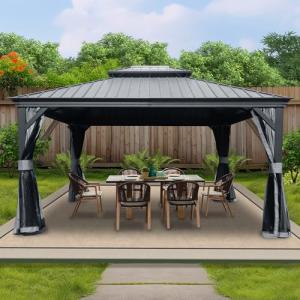
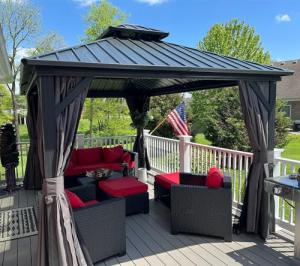
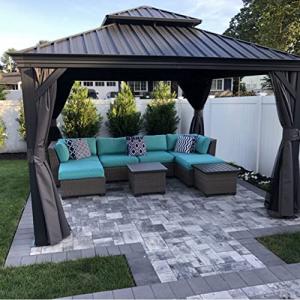
Side panel compatibility. Many hardtop gazebos are designed to accept optional side panels — mesh screens, polycarbonate sheets, or fabric curtains — that can be added to close off one or more sides when needed. This versatility is a significant selling point, effectively turning the gazebo into a semi-enclosed outdoor room.
Rainwater drainage. Good designs route rainwater through internal channels within the posts down to ground level, keeping the water away from the interior. Poor drainage designs allow water to run down the outside of the posts or pool at the base.
Wind rating. Reputable manufacturers specify a wind speed rating for their gazebos. Look for structures rated to at least Beaufort Force 6 (approximately 40 km/h) or higher for year-round outdoor use in exposed locations.
Assembly and Installation
Hardtop gazebos are designed for self-assembly, though the process is more involved than putting together flat-pack garden furniture. Most mid-range models require two adults and three to five hours to assemble correctly. Larger or more complex designs can take a full day.
The key to a good result is reading the instructions carefully before starting and sorting all components before lifting anything. The roof section is typically the most awkward stage — it's heavy, often requiring two or three people to lift into position simultaneously.
Ground surface considerations. Hardtop gazebos can be installed on grass, gravel, concrete, paving slabs, or decking. For long-term stability, anchoring to a solid surface is strongly recommended. Most gazebos come with foot plates that can be bolted to paving or decking. On grass, ground anchor kits are available.
Building regulations. In most cases, a freestanding garden gazebo doesn't require planning permission, but there are conditions around size, proximity to boundaries, and whether the structure is considered a permanent installation. It's always worth checking with your local planning authority before installation if you have any doubt.
Maintenance and Care
One of the strongest practical arguments for a hardtop gazebo over a fabric model is how little maintenance it actually needs.
For aluminium models, an annual wash-down with soapy water and a soft brush is generally sufficient to keep the frame and roof looking clean. If the structure is in a shaded location prone to algae or moss, a diluted outdoor cleaner applied once a year prevents buildup.
Check fixings and bolts once a year, particularly before the autumn and winter storm season. Tighten anything that has worked loose. Inspect the powder coat for any chips or scratches and touch up with a matching paint pen if needed — this prevents corrosion starting at the damaged point.
Side panels, if fitted, should be stored during extended periods of non-use in harsh weather, as they typically have lower weather resistance than the main structure.
Hardtop Gazebos as Outdoor Rooms
The most exciting development in the hardtop gazebo category over the past several years is the move toward fully furnished outdoor room configurations. With the addition of side panels, outdoor lighting, heating, and weather-resistant furniture, a quality hardtop gazebo becomes a genuine extension of your living space.
Outdoor-rated LED strip lighting fitted under the roof beams creates ambience for evening use. Freestanding patio heaters or wall-mounted infrared heaters extend usability into cooler months. With closed side panels on three sides and open-sided access on one, a hardtop gazebo in this configuration functions as an outdoor lounge, dining room, or bar space that can be used comfortably for the majority of the year.
This transformation of the garden gazebo from occasional-use shade structure to year-round outdoor living space is why hardtop models have grown so significantly in popularity. They're not just garden furniture — they're architecture.