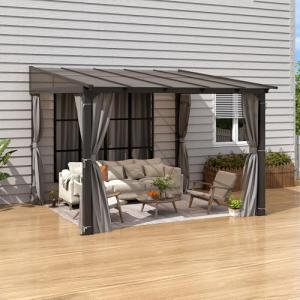
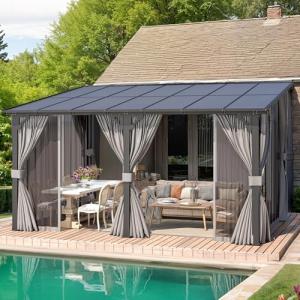
What Is a Lean-To Gazebo?
A lean-to gazebo — also called a wall-mounted or attached gazebo — is an outdoor sheltered structure that fixes directly onto an existing wall of your home, garage, or outbuilding. Unlike a freestanding gazebo, which stands independently in the middle of a yard, a lean-to design uses your property's wall as its rear support, with two or more legs at the front bearing the rest of the load.
The roof typically slopes away from the wall at a single pitch angle, channeling rainwater outward and away from the building. This design is sometimes called a "mono-pitch" or "pent roof" configuration, and it's precisely what makes lean-tos so practical in climates with frequent rainfall.
In practical terms, a lean-to gazebo creates a covered outdoor living zone that feels like a natural extension of the interior — a seamless transition between inside and outside that freestanding structures simply can't replicate.
Why Choose a Wall-Mounted Gazebo Over a Freestanding One?
The question most buyers face is whether to go attached or freestanding. Both have merit, but lean-to gazebos offer a distinct set of advantages that make them the better choice in many yards and outdoor spaces.
Space Efficiency
Narrow urban backyards, townhouse patios, and side yards are often too tight or irregular for a full square footprint. A lean-to gazebo uses one wall as its backbone, meaning it can tuck neatly against the house and leave the remaining yard open and usable. You get the full benefit of covered outdoor space without sacrificing the lawn or garden beds.
Structural Stability
Being anchored to a solid masonry or timber-framed wall gives lean-to gazebos a significant structural advantage. They are inherently more resistant to wind loading than freestanding structures of comparable size. In exposed yards or coastal locations, this matters enormously.
Seamless Indoor-Outdoor Flow
Position a lean-to gazebo outside sliding glass doors, a kitchen addition, or a set of French doors, and you effectively extend your living space outdoors. Entertaining becomes more fluid — guests move between interior and exterior without stepping into the rain, and the covered zone acts as a buffer between the warmth of indoors and the open air.
Reduced Material and Cost
Because the rear wall is already provided by your home, a lean-to design requires fewer materials — no rear posts, no rear roofing panels. This typically makes wall-mounted gazebos more affordable than equivalently sized freestanding models.
Materials: What Are Lean-To Gazebos Made From?
The material you choose affects longevity, maintenance requirements, aesthetics, and cost. Here are the main options available across the category.
Powder-Coated Aluminum
Aluminum is the dominant material in the modern lean-to gazebo market for good reason. It is lightweight yet rigid, completely rust-proof, and available in a wide range of powder-coat finishes — from anthracite gray and slate black to heritage cream and forest green. A quality powder-coated aluminum frame will require virtually zero maintenance beyond an occasional wipe-down with soapy water. It won't rot, warp, or corrode, making it ideal for regions with heavy rainfall or high humidity.
Galvanized Steel
Steel frames offer greater raw strength than aluminum at a similar price point, but they are heavier and must be properly galvanized and coated to prevent rust. Galvanized steel lean-tos are a solid choice for larger spans — structures over 13 feet wide where deflection under snow or wind load could be a concern.
Pressure-Treated Timber
Timber lean-to gazebos bring a warmth and naturalness that metal cannot match. Pressure-treated softwood or hardwood frames develop character over time and can be stained or painted to suit your yard's aesthetic. The trade-off is maintenance — timber should be retreated every two to three years to maintain its weather resistance, and it requires more careful inspection for splits or rot over time.
Polycarbonate vs. Glass Roofing
The roof material is as important as the frame. The two main options are:
Polycarbonate panels are lightweight, impact-resistant, and thermally efficient. Multi-wall polycarbonate — typically ⅝ inch or 1 inch thickness — traps air between layers and provides meaningful heat retention. It's a practical choice for year-round use and is far less likely to shatter than glass. Tinted or opal variants diffuse direct sunlight to create a softer, more comfortable environment underneath.
Tempered glass delivers a premium look with full optical clarity. It allows maximum natural light and carries the visual quality associated with high-end garden rooms and sunrooms. A glass-roofed lean-to gazebo feels more permanent and architecturally intentional. The weight requires a robust frame and secure wall fixings, but the result is a structure that genuinely adds to your home's visual appeal and potentially its resale value.
Sizes and Configurations
Lean-to gazebos are available across a wide size range, from compact 6 ft x 6 ft canopies to substantial 20 ft x 13 ft outdoor rooms. Here's how to think about sizing.
Small (Up to 10 ft Wide)
Ideal for a single seating area — a bistro table and two chairs, perhaps, or a comfortable lounger. These compact models suit narrow side passages, small urban patios, or walls adjacent to a deck. They're also the most affordable entry point into the category.
Medium (10 ft–15 ft Wide)
The sweet spot for most residential yards. A 13 ft x 10 ft lean-to comfortably accommodates a six-person dining set, a grill station, and a freestanding planter or two. This size is large enough to feel like a proper outdoor room but modest enough to avoid dominating the yard.
Large (15 ft and Over)
At this scale, a lean-to gazebo becomes a genuine outdoor living and dining space capable of hosting parties, housing an outdoor kitchen, or even functioning as a covered workspace. Structures at this end of the spectrum often benefit from optional extras like integrated guttering, LED lighting channels, and polycarbonate or glass side panels for wind protection.
Key Features to Look For
When comparing models across the lean-to and wall-mounted gazebo category, these are the specifications that separate quality products from those that will disappoint after a season or two.
Fixing System and Wall Compatibility
The rear fixing plate or bracket system is critical. It must be compatible with your wall type — masonry, brick, timber cladding, or vinyl fascia — and the fixing hardware should be stainless steel to prevent rust staining. Some models include adjustable height brackets that allow the lean-to to be set at varying heights, which is helpful if your wall has irregular features.
Load Ratings
A decent lean-to gazebo should specify both its snow load rating (measured in lbs per square foot) and its wind resistance rating. For most of the continental US, look for a snow load of at least 4 lbs/ft² as a baseline — more in northern states or mountain regions where 20–40 lbs/ft² or higher may be required by local building codes. Wind resistance should be rated for at least 60 mph sustained winds, with 90 mph or better for hurricane-prone coastal areas. These ratings ensure the structure won't buckle under a heavy snowfall or deform in a serious storm.
Integrated Guttering
Rainwater management is frequently overlooked during purchase and deeply regretted afterward. A lean-to roof funnels water toward the front edge with force. Without integrated guttering, this water cascades off the leading edge, pooling directly where people tend to stand as they move in and out of the structure. Quality models build the gutter channel directly into the front beam, with downpipe outlets at the corners — tidy, effective, and out of sight.
Adjustable Pitch
Some lean-to gazebos offer an adjustable roof pitch, typically between 5° and 15°. This allows you to fine-tune the roof angle to suit local rainfall intensity and the height difference between your wall attachment point and the desired front post height.
Building Permits: Do You Need One?
In the US, permit requirements for lean-to gazebos vary by state, county, and municipality. Many jurisdictions exempt accessory structures under a certain size — commonly 200 sq ft or less — from requiring a building permit, particularly when the structure is open-sided and not permanently enclosed. However, once a lean-to attaches directly to the house's structural wall, it may be classified as an addition rather than an accessory structure, triggering different code requirements.
Rules also differ in HOA-governed communities, historic districts, and flood zones. It's always the right move to check with your local building department before ordering, particularly for larger structures or those with enclosed sides and a solid roof.
Installation: DIY or Professional Fit?
Most lean-to gazebos in the small to medium size range are designed for competent DIY installation. Assembly typically involves slotting aluminum extrusions together with connecting brackets and anchoring the rear rail to the wall. The process generally takes two adults a full day for a medium-sized structure.
For larger models, those with glass roofing, or situations where the wall attachment requires drilling into structural masonry at height, professional installation is the sensible route. Many suppliers offer fitting services, and the peace of mind — along with any associated warranty validation — is usually worth the additional cost.
Maintenance and Longevity
A lean-to gazebo in aluminum with a polycarbonate or glass roof is one of the lowest-maintenance outdoor structures available. An annual inspection covers the essentials: check that wall fixings remain tight, clear any leaf debris from gutter channels, rinse the frame with a mild detergent solution, and inspect polycarbonate panels for any yellowing or UV degradation — a sign that the UV-protective coating is nearing the end of its life, typically after 10–15 years in direct sun.
Timber lean-tos require more attention. Inspect for splits, soft spots, or mold annually. Reapply preservative or exterior paint as needed — every two years is a reasonable minimum for outdoor softwood.
Styling Your Lean-To Gazebo
The functional case for a lean-to gazebo is strong enough on its own, but the aesthetic opportunities are equally compelling. A wall-mounted gazebo is one of the most transformative additions you can make to a yard, particularly because it creates a defined outdoor "room" with a clear boundary and overhead enclosure.
String lights woven through the frame create warmth and atmosphere for evening use. Climbing plants — jasmine, wisteria, clematis — can be trained up the side posts and along the front beam to soften the structure and integrate it into the wider yard plantings. A poured concrete or natural stone paver base beneath the gazebo anchors the structure visually and creates a sense of permanence. Outdoor rugs, lanterns, and side-panel curtains complete the transition from backyard structure to genuine outdoor living space.
Who Is a Lean-To Gazebo Right For?
Wall-mounted and lean-to gazebos suit an unusually wide range of properties and buyers. If your yard is modest in size, a lean-to maximizes usable covered space without consuming the entire outdoor area. If your yard is large but your entertaining happens close to the house, the direct connection to the property is a genuine convenience. If you're a keen outdoor cook, the proximity to the kitchen and the overhead shelter create a natural outdoor kitchen zone.
They work on modern additions, traditional homes, narrow side yards, urban rooftops with adjacent walls, and rural outbuildings alike. The variety of sizes, materials, roof types, and finish options available across the category means there is a lean-to gazebo suited to almost every situation — and the structural common sense of using your existing wall as part of the structure means you almost always get more for your money than with a freestanding equivalent.