Browse our full range of metal and aluminium gazebos below — filtered by size, material, roof type, and style — and find the outdoor structure that will define your garden for years to come.
Metal & Aluminum Gazebos
Product List
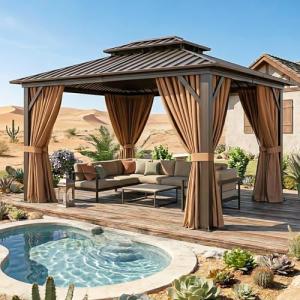
Breezestival 10x12FT Hardtop Gazebo, Metal Fr...
Product Review Score
4.86 out of 5 stars
131 reviews$599.99
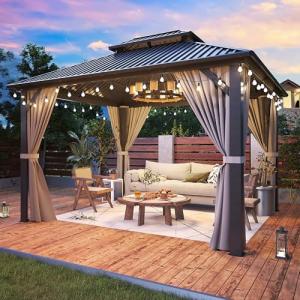
AirWire 10'x12' Gazebo Hardtop Gazebo, Alumin...
Product Review Score
4.99 out of 5 stars
178 reviews$499.99
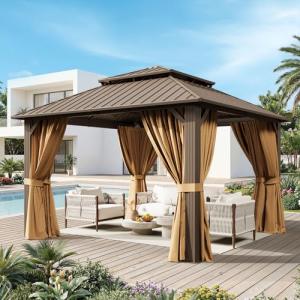
Breezestival 12x12FT Hardtop Gazebo, Metal Fr...
Product Review Score
4.55 out of 5 stars
163 reviews$919.99
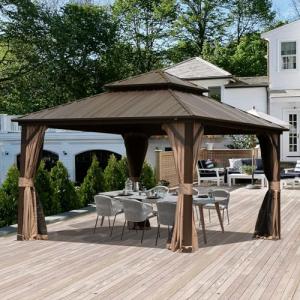
Domi 12' x 12' Hardtop Gazebo Permanent Metal...
Product Review Score
4.33 out of 5 stars
13 reviews$799.99
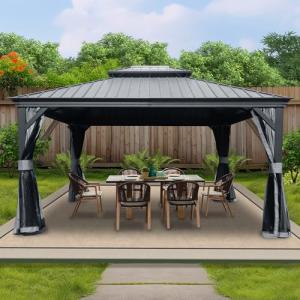
Kozyard Alexander 12' x 14' Hardtop Gazebo, A...
Product Review Score
4.11 out of 5 stars
90 reviews$1,539.10
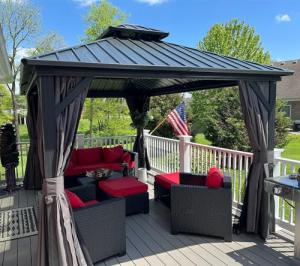
Domi 10' x 12' Hardtop Gazebo Permanent Metal...
Product Review Score
4.88 out of 5 stars
112 reviews$689.99 $599.99
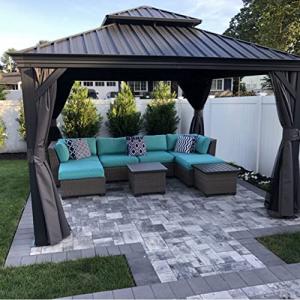
PURPLE LEAF 10' X 12' Permanent Hardtop Gazeb...
Product Review Score
4.51 out of 5 stars
204 reviews$1,059.00
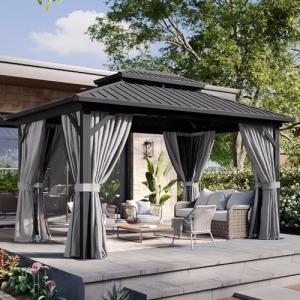
Why Choose Metal or Aluminum Over Other Materials?
Wood gazebos have a classic charm, but they demand significant upkeep — regular staining, sealing, and vigilance against rot, insects, and warping. Vinyl is low-maintenance but lacks rigidity and can feel lightweight. Metal and aluminum strike a compelling balance: they're inherently resistant to the elements, require minimal care, and deliver the kind of solid, substantial feel that elevates a garden or patio from pleasant to truly impressive.
Aluminum is the most popular choice in this category for good reason. It's naturally corrosion-resistant (no rusting), lightweight enough for straightforward assembly, and finished with powder-coated surfaces that hold colour for years without peeling or fading. You get all the structural integrity of metal without the weight or the rust risk.
Steel gazebos — particularly galvanised or powder-coated steel — offer even greater load-bearing strength, making them ideal for heavier canopy systems, integrated lighting, or solid polycarbonate roofing. If you live in a high-wind region or get significant snowfall, a steel-framed structure offers the extra peace of mind that heavier conditions demand.
Both materials are environmentally friendly at end-of-life, as they're fully recyclable — a consideration that matters more and more to conscious buyers.
Key Features to Look for in a Metal Gazebo
Not all metal gazebos are created equal. Here's what separates a structure you'll love long-term from one that disappoints after the first winter.
Frame Thickness and Gauge
The wall thickness of the aluminium or steel tubing determines how rigid and stable the gazebo is under pressure. Look for frames with a minimum of 1.2mm wall thickness for aluminium; heavier-duty models will reach 1.5mm or beyond. For steel, 1.0–1.5mm gauge steel is standard in residential-grade structures. Thicker frames translate directly to better wind resistance and a longer product lifespan.
Powder-Coat Finish Quality
The quality of the powder-coat finish affects both aesthetics and durability. A good powder-coat is applied electrostatically and baked on, creating a hard shell that resists chipping, scratching, fading, and moisture penetration. High-quality finishes will come with UV-resistance certification, which matters enormously in sunny climates. Classic colours include anthracite grey, bronze, black, and white — tones that complement virtually any garden design.
Roof and Canopy System
Metal gazebos come with several roofing options:
- Polycarbonate panels — semi-transparent or tinted, they let in diffused light while blocking UV rays and keeping rain out. Ideal for year-round use.
- Fabric canopies — usually polyester with UV treatment and water-resistant coating. Great for seasonal use; replaceable when worn.
- Metal roof panels — the most robust option, often found on pergola-style gazebos with a solid or slatted roof. Permanent and virtually maintenance-free.
If you plan to use your gazebo during autumn and winter, a polycarbonate or solid metal roof system is worth the additional investment over a fabric canopy alone.
Wind and Load Rating
Reputable manufacturers will state a wind speed rating for their gazebos, typically in km/h or mph. For most UK and European climates, a minimum rating of 75 km/h is acceptable for a sheltered garden position; if your site is more exposed, look for structures rated to 100 km/h or higher. Snow load capacity is equally relevant in colder regions — measured in kg/m², this tells you how much accumulated snow the roof can safely bear.
Ground Anchoring System
Even the most robust gazebo needs to be properly anchored. Look for models that include a proper anchoring kit — spike anchors for grass installations, and plate-mount anchors for concrete or paved surfaces. Some premium gazebos feature adjustable leg brackets that allow levelling on uneven ground, which is a genuine practical advantage in typical garden settings.
Sizes and Configurations
Metal and aluminium gazebos are available in a wide range of footprints, and the right size depends entirely on how you intend to use the space beneath it.
Small gazebos (2m × 2m to 3m × 3m) are perfectly scaled for a bistro table and two chairs — ideal as a quiet reading corner or morning coffee spot. They fit comfortably on a modest patio without overwhelming the garden.
Medium gazebos (3m × 3m to 4m × 4m) are the sweet spot for most households. They comfortably accommodate a 6-seater dining set with space to move around, and can be paired with outdoor heaters, string lights, or side curtains to create a fully furnished outdoor room.
Large gazebos (4m × 6m and above) are suited to entertaining spaces, garden bars, hot tub enclosures, or multi-use outdoor living areas. These larger structures are more commonly steel-framed to handle the span and load requirements.
Freestanding rectangular and square designs are the most versatile and widely available. Corner and L-shaped configurations exist for specific architectural situations, and wall-mounted lean-to gazebo designs are popular for connecting to a house or garden wall.
Style and Aesthetic Considerations
Modern metal gazebos span a wide design spectrum, from minimalist architectural forms to more ornate classical structures.
Contemporary and Minimalist
Clean lines, slim powder-coated aluminium profiles, and neutral colour palettes (anthracite, black, grey) define the contemporary gazebo aesthetic. These designs sit comfortably in modern landscaped gardens and work well alongside composite decking, architectural planting, and outdoor furniture with a Scandi or industrial flavour. Louvred aluminium roof systems — where the roof slats can be opened and closed manually or electrically — are a premium expression of this style, giving you dynamic control over shade and ventilation.
Classic and Traditional
For cottage gardens, period properties, or landscapes with a more traditional character, metal gazebos with decorative arched details, finial accents, and a white or bronze finish create a timeless focal point. These often feature fabric canopies with valanced edges and can be dressed with climbing plants on the uprights for a romantic, established feel.
Industrial and Raw
A growing number of buyers are drawn to the raw material aesthetic — dark steel frames with a deliberately utilitarian look, paired with corrugated metal or clear polycarbonate panels. This style suits urban gardens, rooftop terraces, and contemporary homes where the architecture itself has an industrial character.
Installation and Assembly
One of the practical advantages of aluminium gazebos in particular is that they're designed for home assembly. Most mid-range models are supplied with pre-drilled components, colour-coded parts, and step-by-step instructions, and can be erected by two adults in a half-day without specialist tools.
Key assembly tips:
- Always lay all components out and check against the parts list before beginning.
- Loosely fit all bolts before final tightening — this allows adjustment and ensures the frame is square before locking it in.
- Anchor the gazebo on the same day it's assembled; an unanchored structure is vulnerable even in moderate wind.
- If your ground is soft or sloped, use a spirit level during leg placement and build up any uneven surface before installation.
For larger or heavier steel structures, professional installation is often worth considering — particularly for permanent gazebos with solid roofing, integrated guttering, or electrical fittings.
Maintenance — Simpler Than You Think
One of the most compelling selling points of metal and aluminium gazebos is how little upkeep they require compared to timber alternatives.
Aluminium gazebos generally need only an occasional wash-down with warm soapy water to remove dirt, pollen, and bird droppings. Check fixings once a year and tighten any that have worked loose. Inspect the canopy (if fabric) for wear or UV damage at the start and end of each season, and replace if needed.
Steel gazebos require slightly more vigilance — check the powder-coat or galvanised finish annually for any chips or scratches, and touch up with appropriate paint immediately to prevent any surface corrosion from developing. Keep drainage holes in the base tubes clear so standing water doesn't accumulate inside the frame.
Both types benefit from a cover during prolonged periods of disuse in winter, particularly if the canopy is a seasonal fabric type rather than a permanent polycarbonate or metal roof.
Accessories That Complete the Setup
A metal gazebo is a structural foundation; the accessories you add transform it into a fully functioning outdoor room.
- Side panels and privacy screens — mesh, fabric, or polycarbonate panels that clip to the uprights for wind protection and privacy.
- Gutter kits — available for most polycarbonate-roofed models, directing rainwater away from the seating area.
- LED lighting systems — solar-powered or 12V strip lighting designed to mount within the frame profile.
- Outdoor curtains — adds softness and a boutique feel; look for UV-stable, quick-dry fabrics.
- Heating — wall-mounted infrared heaters or freestanding patio heaters extend the season significantly.
- Flooring tiles — interlocking deck tiles or artificial grass squares define the floor and lift the overall feel of the space.
Making the Right Choice for Your Garden
The best metal or aluminium gazebo for your space comes down to four practical questions: How much usable space do you have? What's your climate like? How will you primarily use the gazebo? And what's your long-term maintenance appetite?
For most buyers, a powder-coated aluminium gazebo in the 3m × 4m range, with a polycarbonate or reinforced fabric roof, robust ground anchoring, and a neutral anthracite or black finish, represents the ideal combination of value, durability, aesthetics, and practicality.
For those in windier or snowier regions, or for anyone building a permanent centrepiece for a landscaped garden, stepping up to a heavy-gauge steel frame with a solid roof system is a worthwhile investment that pays dividends in peace of mind and longevity.