Types of Wooden Gazebos
Not all wooden gazebos are the same, and understanding the main categories helps you choose the right structure for your space and how you intend to use it.
Traditional Octagonal Gazebos
The classic shape. An octagonal wooden gazebo has eight sides, which gives it a distinctive, almost pavilion-like appearance. This design has been used in public parks and formal gardens for centuries, and it translates beautifully into private residential settings. The shape distributes weight evenly, makes the interior feel open and airy, and gives you a 360-degree view of your surroundings. These work particularly well as focal points in larger gardens or as a destination at the end of a garden path.
Square and Rectangular Gazebos
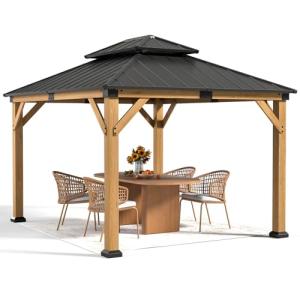
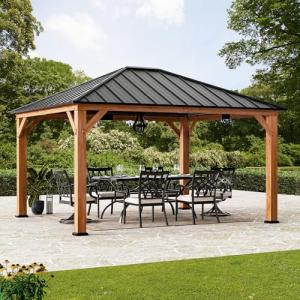
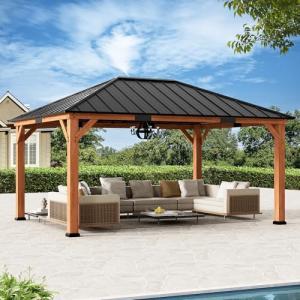
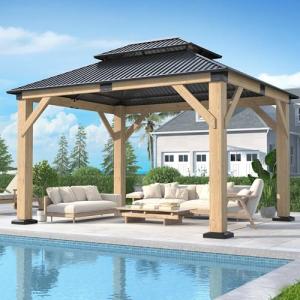
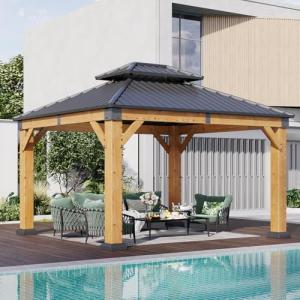
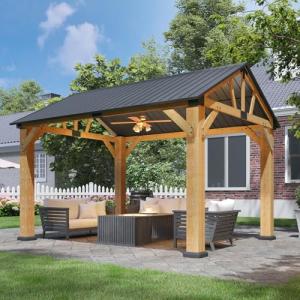
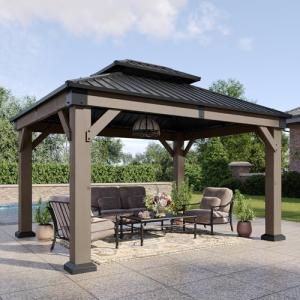
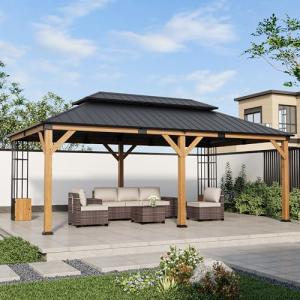
If you're working with a defined patio area, a square or rectangular wooden gazebo often makes more practical sense. These structures integrate naturally with decking, patios, and outdoor dining setups. They're easier to furnish because standard outdoor furniture is designed around straight lines and right angles. A rectangular gazebo over a dining table, for instance, creates an outdoor room that's genuinely functional all year round, especially when fitted with side panels or blinds.
Corner Gazebos
A corner gazebo is designed to fit snugly into the angle where two garden boundaries meet. These triangular or wedge-shaped structures are clever solutions for smaller gardens where space is at a premium. Rather than sitting in the middle of the lawn and taking up usable space, a corner gazebo makes use of a part of the garden that might otherwise be neglected.
Pergola-Style Wooden Gazebos
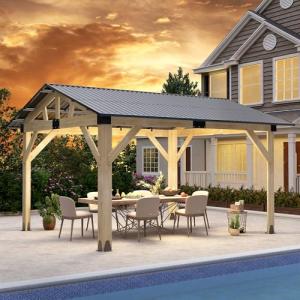
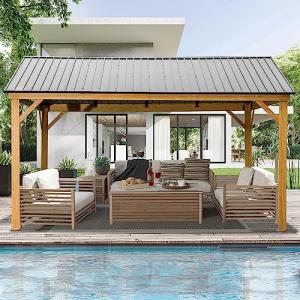
Some wooden gazebo designs blur the line between a traditional gazebo and a pergola. These structures often have an open or partially open roof with cross beams, allowing climbing plants to weave through over time. The result is a structure that feels increasingly organic and integrated into the garden as the seasons pass. These are popular choices for people who want something that feels grown rather than installed.
Choosing the Right Wood for Your Gazebo
The type of wood matters enormously — not just for how your gazebo looks on day one, but for how it holds up over years of exposure to rain, frost, UV light, and temperature fluctuation. Here are the most commonly used timber options and what you need to know about each.
Pressure-Treated Timber
This is the most widely used option for wooden gazebos in temperate climates. Pressure treatment forces preservative chemicals deep into the wood fibres, dramatically extending its resistance to rot, fungal decay, and insect damage. A pressure-treated pine or spruce gazebo, properly maintained, can last well over 20 years. The initial green or brown tint from the treatment fades over time, and the wood can be painted or stained once fully dry.
Western Red Cedar
Cedar is a premium natural choice. It contains oils that naturally resist moisture and insects, which means it needs less chemical treatment than softwoods. It's also dimensionally stable — it expands and contracts less with changes in humidity, which reduces warping and splitting. Cedar has a beautiful reddish-brown tone that weathers to an attractive silver-grey if left untreated. For people who prefer a more natural approach to wood care, cedar is an excellent option.
Hardwoods — Oak, Iroko, and Teak
Hardwood gazebos are at the premium end of the market, and for good reason. Hardwoods are dense, strong, and naturally durable. An oak gazebo has a presence and solidity that softwood structures can't match. Iroko and teak are often used as sustainable alternatives to more endangered tropical hardwoods, and both offer outstanding weather resistance. Hardwood gazebos are heavier investments upfront, but they require less maintenance and last significantly longer than softwood alternatives.
Engineered Timber and Glulam
Some modern wooden gazebos use glue-laminated timber (glulam), where multiple layers of wood are bonded together to create structural beams that are stronger and more stable than solid sawn timber of the same dimension. This allows for longer spans, curved shapes, and a more engineered aesthetic. If you're looking at large or architecturally ambitious gazebos, glulam construction is worth understanding.
Key Features to Look for When Buying a Wooden Gazebo
Once you've settled on a general style and timber type, there are specific structural and design features that separate a well-made gazebo from one that will cause you problems within a few years.
Roof Construction and Weatherproofing
The roof is the part of your gazebo that takes the most punishment. Look for solid roof boards rather than thin overlapping planks — solid boarding is heavier but far more weather-resistant. The roofing material matters too: bitumen felt, EPDM rubber, and cedar shingles are all popular choices, each with different aesthetics and longevity profiles. A well-constructed roof with adequate overhang will protect not just the interior space but also the tops of the posts and beams, which are the most vulnerable points for water ingress and rot.
Post and Foundation Design
The posts are the skeleton of your gazebo. Posts that sit directly in the ground are vulnerable to rot at the base — the soil-to-wood interface is where moisture and fungal activity are most intense. Metal post anchors or base plates that lift the timber slightly off the surface are a much better detail. On the foundation side, a properly laid concrete pad or paving slab base is essential for long-term stability. A gazebo that shifts and settles will develop structural problems regardless of how good the timber is.
Joinery Quality
Look at how the components connect. Mortise and tenon joints, properly fitted and secured with bolts or coach screws, are significantly stronger than butt joints held together with basic nails. A gazebo that wobbles when you push it is one that will fail prematurely. Good joinery is harder to see in product photographs, which is why reading technical specifications and customer reviews matters before you buy.
Balustrades, Railings, and Decorative Details
These elements influence how a gazebo looks and how safe it feels to use. Traditional-style gazebos often feature turned spindles, decorative fascia boards, and shaped finials on the roof peak. More contemporary designs lean toward clean horizontal boards or open framing. Neither is inherently better — it comes down to what suits your garden's character. What does matter is that railings are securely fixed and appropriately spaced, particularly if children will use the space.
Installing Your Wooden Gazebo
Most wooden gazebos sold for domestic use come as kits, with pre-cut and pre-drilled components designed for assembly by a reasonably competent DIYer. That said, a few points are worth bearing in mind.
Check your local planning regulations before you start. In many countries, garden structures are permitted under general development rights up to a certain size, but larger gazebos or those placed near boundaries may need formal permission. It's worth a quick check rather than discovering the issue after installation.
Prepare your base properly. Even the best gazebo kit will underperform on an uneven or unstable base. A concrete pad is the most robust option. Pre-existing paving can work if it's level and well-laid, but loose gravel or uneven flagging is not suitable.
If you're not confident about assembly, hiring a professional is a sound investment. A gazebo that's been properly assembled will last decades. One that's been improperly bolted together will require remedial work within a few seasons — or worse, could become a safety hazard.
Maintaining Your Wooden Gazebo
Maintenance is the single biggest factor in how long your wooden gazebo lasts. The good news is that it doesn't require a huge amount of work — but it does require consistent attention.
Clean the structure once or twice a year. Algae, moss, and dirt accumulate on horizontal surfaces and in joints, holding moisture against the wood. A stiff brush and a diluted wood cleaner is usually sufficient. Avoid pressure washing at high pressures, which can damage wood fibres.
Re-treat the timber every two to three years, or whenever the surface starts to look dry, grey, or porous. The right product depends on your timber and finish: oil-based treatments penetrate the wood and feed it; film-forming stains and paints sit on the surface and form a barrier. Both approaches work well when applied correctly to prepared surfaces.
Inspect joints, fixings, and the roof covering annually. Catching a loose bolt or a small area of failing roofing felt early costs very little to fix. Ignoring it until the water has been getting in for two winters is a different and significantly more expensive conversation.
Wooden Gazebos as a Property Investment
It's worth being honest about this: a wooden gazebo isn't a guaranteed return on investment in the way that a kitchen extension might be. But it does add genuine appeal to a property, particularly in markets where outdoor living is valued. Estate agents consistently report that well-maintained, attractive garden buildings contribute positively to a buyer's perception of a property.
More practically, a wooden gazebo extends the usable seasons of your outdoor space. A shaded, sheltered area that you can use comfortably from early spring through to late autumn — and potentially year-round with the right accessories — represents a real improvement to daily life. That has a value that's harder to quantify than a surveyor's figure, but it's real nonetheless.
Finding the Right Wooden Gazebo for Your Space
The best wooden gazebo for you depends on the size of your garden, how you intend to use the space, your budget, and your aesthetic preferences. Think carefully about scale — a small gazebo in a large garden can look forlorn, while an oversized structure in a modest space will feel oppressive. A good rule of thumb is to mark out the footprint with canes and string before committing, so you can live with the dimensions for a day or two before placing your order.
Consider how the structure will be oriented relative to the sun, prevailing winds, and your views. A gazebo positioned to catch the evening sun, sheltered from the prevailing westerly, and oriented away from a neighbour's window will get used far more often than one placed purely for convenience.
Wooden gazebos are long-term additions to your home. Take the time to choose well, prepare properly, and maintain consistently — and you'll have a structure that rewards you for many years to come.